











A businessman in a white shirt and hand wraps drills punches on focus pads in a dark dojo, while a coach watches silently from the edge of the mat.

Sweat in practice. Dominate the boardroom.

Nobody reads a book about karate, or watches a Jackie Chan movie, and then steps into the MMA octagon to fight. So why do people read a book about sales or sit through a webinar, get on a call with a real customer, and act surprised when they mess it up?

Nothing is wrong with the theory. It is just useless without practice, and a lot of it. Turn your knowledge into negotiation skill: practice against AI opponents on cases built around one technique at a time. Build the reflexes here, then spar against real people on the platform, and finally go and win your real customers.

Start practicing

Free trial. No card, no obligations.

From theory to the ring.

Martial artists don't learn from lectures alone, and once they step into the ring, it's too late to learn. They learn in between, in a safe place where they can focus on one technique at a time. The same is true for negotiation, communication and every other people skill.

  1. You have this

    Theory

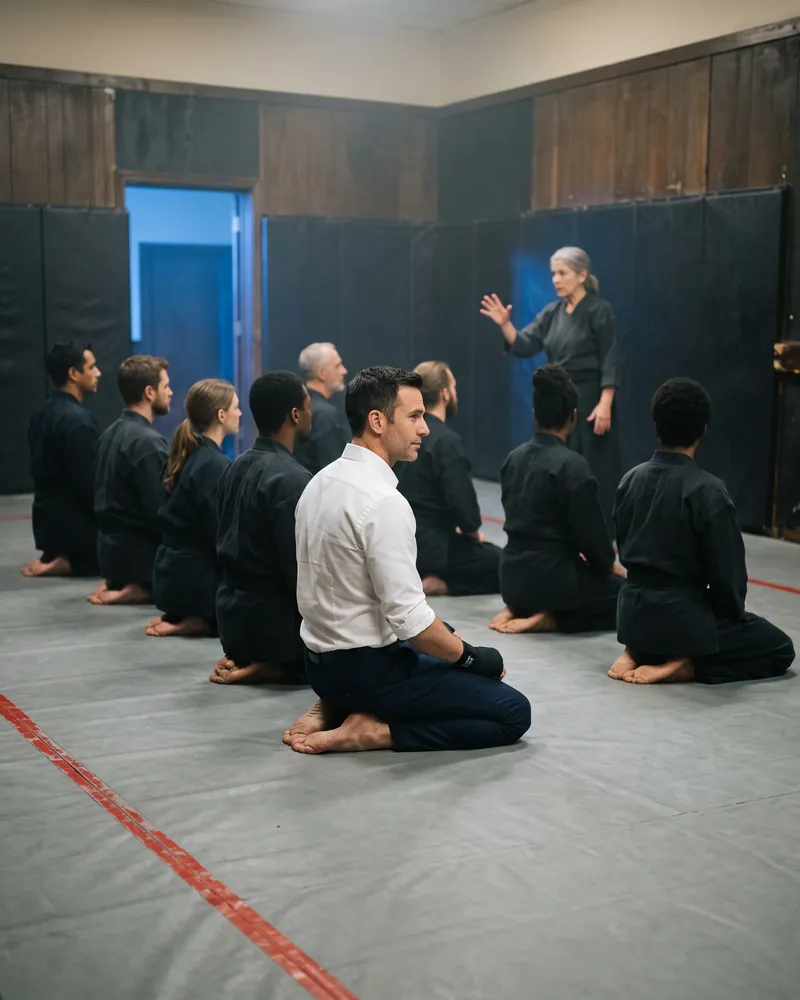
    A martial-arts class sits on the mat listening to the sensei; one student in a white business shirt listens among them.

    The sensei explains, everyone listens and nods. That is the book, the course, the webinar. Necessary, and it only gets you to the door.

  2. You start here

    The dojo

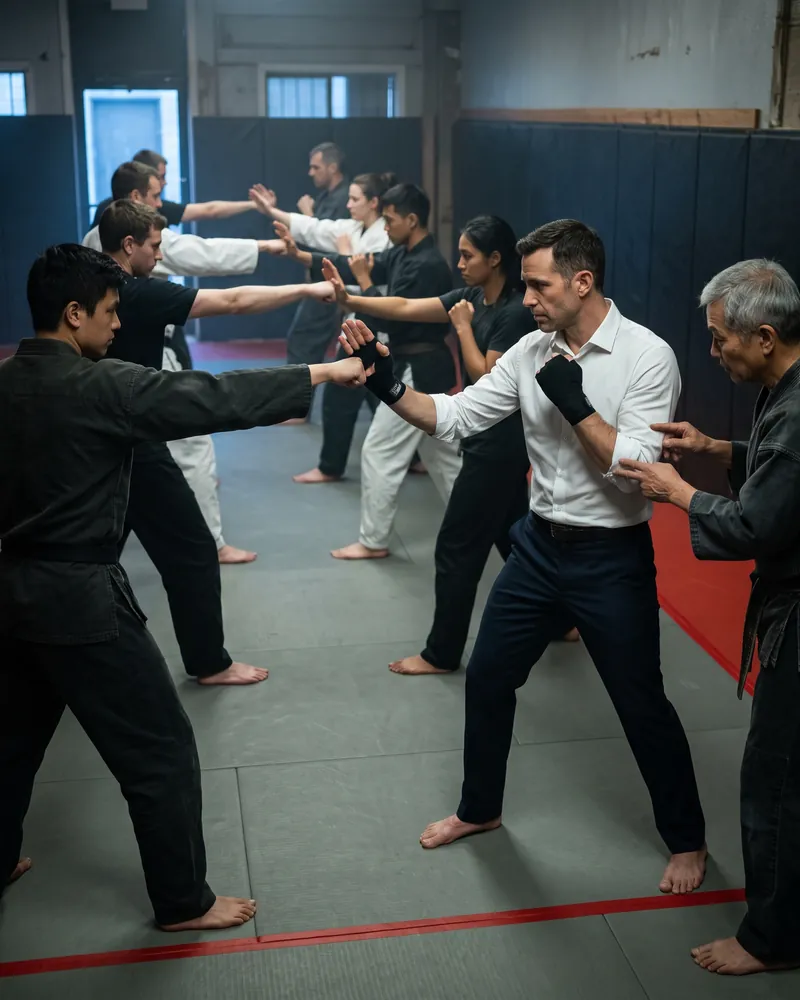
    Pairs of students repeat the same technique slowly and deliberately while the sensei corrects one student’s arm.

    Drills against an AI opponent, one technique at a time. Each case trains a single skill, such as withstanding manipulation. You repeat it until it becomes a reflex.

  3. Coming next

    Sparring

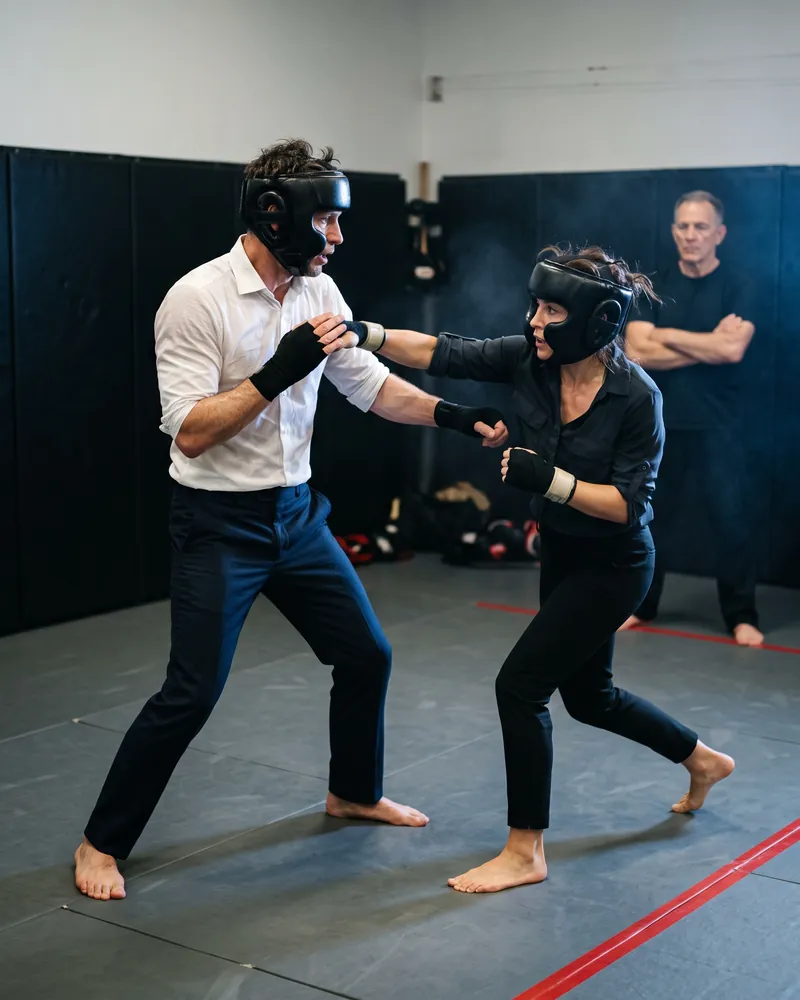
    Two students in business clothes and sparring gear trade moves on the mat while a coach watches from the edge.

    Real people, real resistance. Practice the cases against other learners and get a debrief that shows exactly what to improve.

  4. Where it counts

    The ring

    In a ring under bright lights, the referee raises the winner’s hand.

    Your real customers. The deal, the renewal, the raise. You win it because the moves are already in your hands.

A match, then the debrief.

Every case is a situation from business or life: a conflict at a hotel reception, or a discount you need to win after a late shipment. Both sides know the common facts. Each side also has its own agenda, its own strengths and its own weaknesses, which the other side doesn't see. Today you play against an AI opponent; matches against real people on the platform are coming next.

Here is one: you booked two nights at a small hotel in Spain. On arrival, the owner has given your room to someone else. You type, he answers. Nobody tells you what to do next: you read his face and his words, the same as across a real table.

Hotel owner: calm

  1. Hotel owner

    Señor, I am sorry, the room is gone. I tried to reach you through Booking.com, no answer, so I let it out. There is a decent hotel five minutes away. Fifty euros a day more, high season. So: what do you want to do?

  2. You

    Please, I've been travelling all day. Can you at least get me a discount at the other place?

    Hotel owner

    A discount? It is high season, señor. Fifty a day, or you try your luck on the street.

  3. You

    Forget the other hotel for a second. What would make this problem go away for you today?

    Hotel owner

    Today? Honestly... today I just want this off my desk.

  4. Your move.

    He gives ground only when you have earned it, and not before.

After the bell

The referee's debrief

What happened

  • Hurt you: Turn 2 (you): You asked for a discount on his terms. That is begging: it told him you need this more than he does, and he dug in.

  • Served your goal: Turn 3 (you): You stopped arguing your own need and asked about his. That question served your goal: he admitted he wants the problem gone today.

The hidden weakness

Revealed in your debrief, once you have played the case.

How to improve

Stop arguing your own need. Keep working his, and find the pressure point that makes this his problem, not yours.

Illustrative excerpt from the Hotel Problem case by Andrey Yatsenko. In a real match, the debrief covers every turn you played.

One case. One skill.

  1. Before the match

    Pick a case

    Each case trains one skill. You get a brief both sides can see, a private agenda only you can see, and a weakness on the other side you have to find.

  2. The match

    Spar

    Type or speak. The opponent stalls, deflects and pushes exactly where you are weakest. The referee stays silent and enforces the rules: they only give ground when you have earned it.

  3. After the bell

    Face the referee

    A turn-by-turn debrief graded on the case author's own rubric. It quotes your words back to you: what worked, where you begged, the moment you missed.

Aggressive can be right. Polite can be wrong.

During the match the referee says nothing. It holds every secret of the case and enforces the rules: begging and charm earn you nothing, finding the real pressure point does. After the bell it judges every turn by one question, not by manners: did that move serve your goal?

✕ Dead ends

  • Charm
  • Begging
  • Threats with nothing behind them
  • Arguing in circles

✓ What wins

  • Finding the other side's real need
  • Questions that move you toward your goal
  • Pressure where they are actually weak
  • Holding your ground on the number

Learn to read a face.

Opponents react as you talk: irritation, boredom, the flicker when you're getting close. On hard cases they keep a poker face. In voice mode you speak your moves and hear them answer.

These faces are deliberately easier to read than real ones. This is practice: you build the habit of watching for the signal here, until it runs on autopilot. Then you fine-tune it on real faces, in live video sparring with other people (coming next).

  • Hotel owner, calm

    Hotel owner

    calm, then irritated

  • Car dealership manager, calm

    Car dealership manager

    calm, then smug

  • Landlord, calm

    Landlord

    calm, then torn

  • Managing director, calm

    Managing director

    calm, then relieved

Cases written by working trainers.

Negotiator 2.0

35 cases

by Andrey Yatsenko

Built on Andrey's business negotiation course, with an exercise for every skill he teaches: when to enter a negotiation at all, how to hold your ground, how to bargain move for move. Every side has a hidden agenda and a hidden weakness. Later modules unlock as you win earlier ones.

SPIN Selling

33 cases

practice course

Drills across all 11 chapters of the classic sales method, one skill per case: from opening the call to earning the next step. Each chapter comes with a short lesson to read before you spar.

More coaches

Coming soon

independent coaches and trainers

New courses from independent coaches and trainers, each built on their own method. Different schools, different styles: the same mat to practice on.

Teach a method? Bring it here

Built for people who negotiate for a living.

B2B sales closers
Your quota lives in the discount you don't give. Drill the price conversation until holding firm is a reflex.
Founders
Investors, first customers, key hires. Every deal feels existential. Rehearse it where losing costs nothing.
Managers and executives
Raises, vendors, office politics: the hard conversations nobody trained you for are the job.
Anyone with one big talk coming up
Rehearse it against an opponent that actually pushes back, not a friend who goes easy on you.

Not only negotiation.

The rule is the same in every hard conversation: knowing how you should communicate is not enough. Until that knowledge becomes an automatic reflex, the conversations that matter will keep going wrong.

Coming from coaches and specialists

  • Emotional intelligence
  • Job interviews
  • Staying calm with someone who has borderline personality disorder or another condition
  • Any conversation where you know what to say, and still freeze

You wrote the method. We make it muscle memory.

Bring your cases and your rubric. We turn them into sparring matches with your name on the course and a revenue share on every learner. Your students practice your method between sessions, not just in them.

Free to start. The mat is waiting.

Start practicing

Free trial. No card, no obligations.